
From Information Provider to Boardroom Sense Maker
Accurate reporting informs the board. Effective reporting helps it understand what matters.
Management invests significant time preparing board materials. Reports are reviewed, numbers are checked and explanations are added. Yet directors can finish a lengthy package knowing many facts without having a clear view of what deserves their attention.
This is the difference between providing information and creating meaning.
Boards need timely, accurate and decision-useful information. That does not necessarily mean more detail. It means information designed around the board’s responsibilities and the judgments it must make.
Consider the difference:
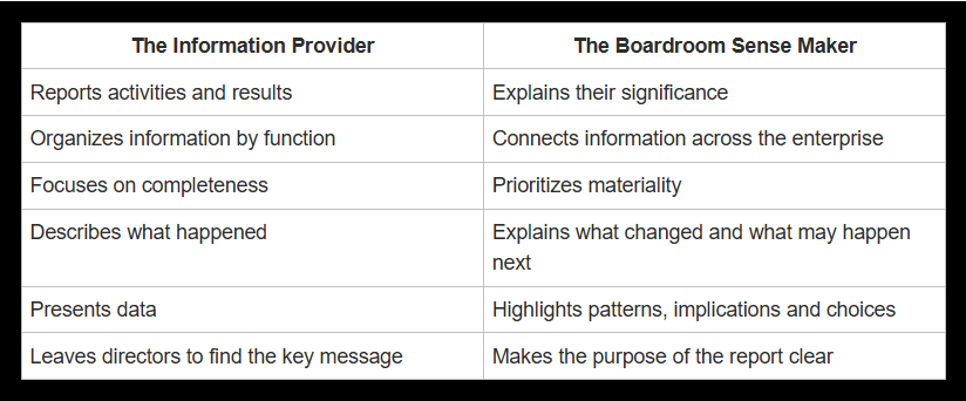
Boardroom sense makers help directors use their limited time and attention effectively.
Here are four ways to make the shift:
1. Begin with the board’s purpose.
Before drafting, identify what the board is being asked to do: oversee, discuss, advise or decide. Craft the report around that purpose. A report prepared for oversight should look different from one supporting a significant decision.
2. Explain what has changed.
Directors rarely need every fact repeated at each meeting. Provide context and highlight significant developments since the last report, why they matter and whether management’s outlook or response has changed.
3. Connect information across the organization.
Boards govern the enterprise, not a collection of functions. Explain how operational results affect strategy, how workforce pressures influence execution or how customer trends could create financial and reputational consequences.
4. Use detail deliberately.
Include the evidence directors need to assess management’s conclusions, but distinguish essential information from reference material. More pages can sometimes transfer the work of finding meaning from management to the board.
Boardroom value comes from helping directors turn information into understanding, judgment and action.