
Moving from siloed board reporting to enterprise-wide reporting
Boards oversee organizations as integrated enterprises, but management reporting often reaches them one function at a time – a collection of updates from business units and key departments such as Finance, Operations, HR, Technology and Legal. Directors find themselves trying to assemble the organizational puzzle themselves.
At other times, enterprise-wide reporting might be so high level that it can be challenging to see emerging issues in key organizational areas. That is why deep dives into key business areas that could materially impact the performance of the organization are also important.
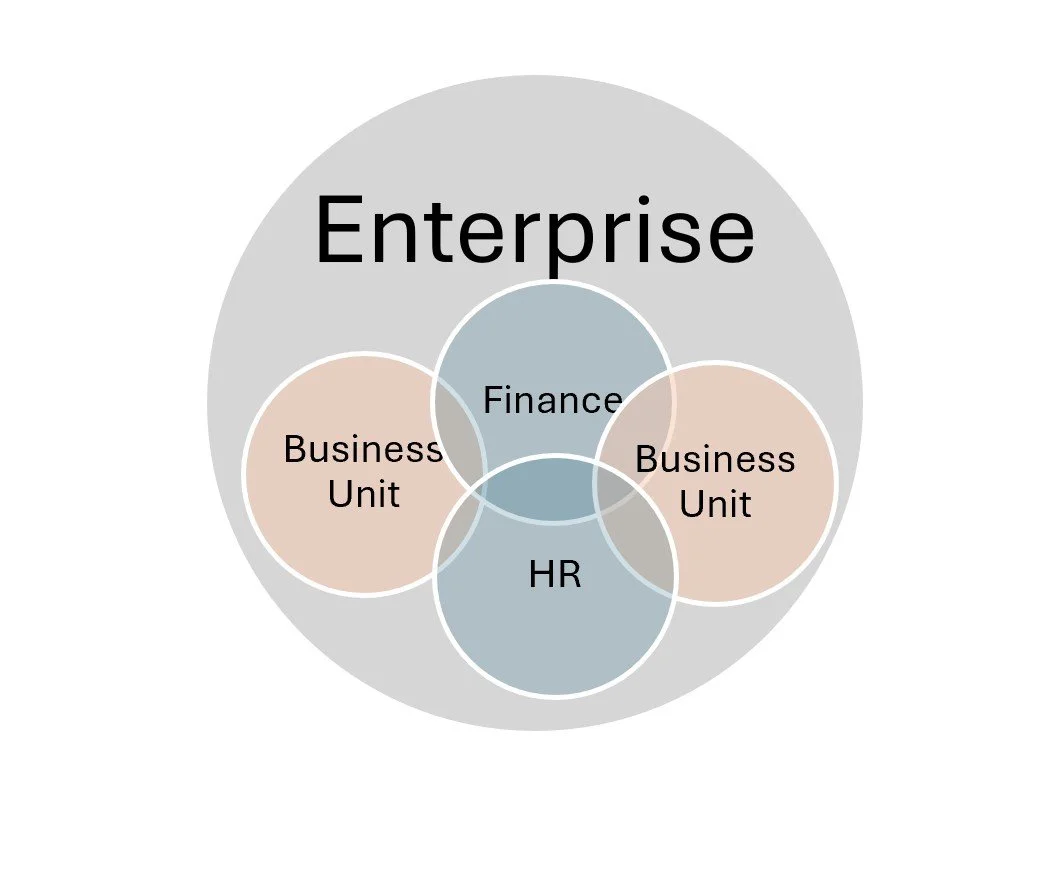
Boards need a balance between the enterprise-wide picture and deep dives into key business areas.
What does siloed board reporting look like?
It involves board package with multiple functional reports, without the fuller enterprise context to pull it together, such as:
An executive provides a deep dive report on one business unit’s activities over the past year, highlighting recent successes, key issues being addressed, and its top-line growth and revenue numbers.
A regular HR report may identify retention or recruiting trends and issues across the organization generally.
The budget report may identify P&L by region.
A technology program report may identify delays in some major initiatives, without highlighting which parts of the business are most affected.
Why is it done this way?
Because board agendas and materials are frequently organized around executive portfolio or functional responsibilities. They naturally focus on the key issues that are most significant from their perspective. Functional reporting provides valuable insight for the board, but it can also be hard to put all the pieces together into a cohesive story.
Cross-functional materials often expose differences in definitions, assumptions, data and outlooks. Finance may call an initiative “on plan” because spending is below budget, while Operations considers it delayed and HR sees a critical capacity problem as the project is burdening teams in other parts of the business.
Another example arises is when Communications or Finance presents a public report that uses different data from what the Board is reading in internal reports, without explaining to the board what is behind those differences.
If directors have to discover and reconcile pieces of information, that is time spent on clarification rather than higher value discussion.
When you have 10+ senior executives and board members in a meeting, that represents a significant collective investment of time.
Integrating the board reporting to better provide an enterprise view can help leaders use their time in the most productive way.
How can you build more integrated enterprise board reporting?
1. Show the board the enterprise view
Shift away from multiple functional slide packages and departmental "data dumps" toward unified dashboards that track key performance and risk drivers in one place. Ensure dashboard metrics focus on strategic outcomes and progress rather than simple departmental activity tracking.
This helps directors maintain the broader enterprise perspective and see how information from different business units connects to strategy and material risks.
To be clear, the objective is not to eliminate functional reporting; it is to reduce the need for regular siloed functional reporting that doesn’t truly provide an enterprise view. Even with integrated enterprise reporting, your agenda should still include occasional deep dives into key functional topics that warrant closer board attention.
2. Create a standing enterprise report
Boards need to understand not only what is happening, but how the different dimensions of the organization or significant issues affect one another. Structure reporting to show how decisions in one area (e.g., technology or operations) create ripple effects in finance, risk appetite, and execution capacity.
A genuinely integrated enterprise-focused report should connect:
Strategic objectives, intended outcomes, and progress
Financial and operational performance, including short-term results and longer-term consequences
Project, people, technology, stakeholder and capability trends and challenges
Principal risks and uncertainties
This tells the broader story and helps directors see the connections that could change their judgment. It also helps directors ask broader, cross-functional questions and assess how projects, resources and budgets align with strategic priorities.
3. Add other multi-departmental reports
Complex topics that affect the broader organization or span multiple functions - such as AI adoption, ESG, talent policies or enterprise risk management – can benefit from integrated reporting frameworks rather than fragmented or siloed updates.
This is particularly useful for complex issues that rely on the board's understanding beyond a functional perspective, such as those which:
affect several strategic objectives or business units;
involve material trade-offs among cost, risk, people, timing or performance;
create dependencies elsewhere in the organization; or
involve materially different perspectives or data across functions.
One person or team should be responsible for gathering relevant information and reporting that topic to the board through an enterprise lens. Business units and departments may mention those topics when relevant, but the board will have the benefit of the broader picture.
4. Highlight interdependencies
Every organization has competing priorities and dependencies among workstreams, requiring trade-offs among cost, speed, quality and risk. Management makes decisions by considering the implications across the organization. Boards need visibility into some of that same thinking, but in a more streamlined form than the full analysis management considered.
Establish the expectation that any presentation include information and scenarios identifying how a change in one area could other functions or the broader enterprise risks and activities. When making recommendations, present options side by side showing the trade-offs across functional lines so directors can evaluate total organizational impact.
5. Reconcile the information
Before finalizing the board materials, contributing teams identify and confirm:
Common definitions, measures and reporting periods
Consistent assumptions and scenarios
The reasons for materially different numbers or views
Which information is fact, forecast or judgment
Better integration starts before drafting. Give contributing teams guidance on the board’s role, including how they are to consider issues with a strategic and enterprise lens. Instruct them to consider the above factors and to work with other functions to align information while preparing the board reports. That is more effective than asking an editor to reconcile disconnected reports just before the board package is due.
Some reconciliation will still need to happen in real time as reports are prepared. But apply some proportionality: 10 hours of reconciliation work to save two hours of collective confusion and clarification for a one-off report may not be worth it.
6. Give someone responsibility for the whole story
Cross-functional reporting needs an integrator, not merely a compiler. One person should be accountable for identifying inconsistencies, gaps and duplication, testing whether the pieces fit together, highlighting key risks and concerns, and ensuring that the report answers a board’s common questions and concerns.
The integrator can also help shape the enterprise narrative. By that, I don't mean smoothing over challenges or differences in viewpoints; I mean helping the board understand the broader picture and the reasoning behind management's decisions.
The appropriate person to be an integrator will vary, but they need sufficient enterprise perspective and authority to challenge inconsistencies across functions. For a major decision, it might simply be the executive sponsoring the decision; for the overall package, it might be the CEO, CFO, Corporate Secretary or another senior enterprise-level role.
How can you carry the enterprise lens into the board meeting?
Integrated enterprise-wide reporting also has an agenda implication. If six executives each present their own section sequentially, integrated written materials may still produce a siloed discussion.
For significant cross-functional issues, organize the discussion around the enterprise issue rather than around departmental presentations. Use on lead presenter who can cover the whole topic, with relevant executives available to add additional context and answer directors’ questions.
As well, contributing teams should discuss how best to present information at the board meeting and reduce duplication where a cross-functional issue appears in multiple agenda items. For example, if there is a compliance issue in one business unit that also has budget implications, the first presenter may need to provide more context but the next presenters won’t provide the same level of detail.
How to get started? Try this at your next reporting cycle
Pick one significant issue that crosses functional boundaries. Before the board package is drafted, identify the 3–4 enterprise questions the board needs answered. Ask the relevant functions to structure their contributions around those questions rather than producing separate updates. Assign one executive to integrate the perspectives, reconcile material differences and highlight the trade-offs or interdependencies that could affect the board's judgment.